
Brownfield redevelopment is defined as the process of cleaning up and repurposing previously used or potentially contaminated properties for new productive use. The U.S. Environmental Protection Agency (EPA) classifies brownfields as real property where expansion, redevelopment, or reuse may be complicated by the presence or potential presence of hazardous substances. For Kentucky landowners, developers, and urban planners, these sites represent a significant opportunity. The EPA has awarded over $270 million in Brownfields grants to 190 communities to accelerate cleanup and reuse. That funding signals a national commitment to urban land reuse that Kentucky stakeholders can access right now.
What is brownfield redevelopment and why does it matter?
Brownfield redevelopment transforms underused, often contaminated urban sites into housing, commercial space, or community assets. These sites range from former gas stations and dry cleaners to shuttered factories and abandoned rail yards. The contamination risk varies widely, but the development opportunity is consistent: brownfields sit in established neighborhoods with existing roads, utilities, and transit access.
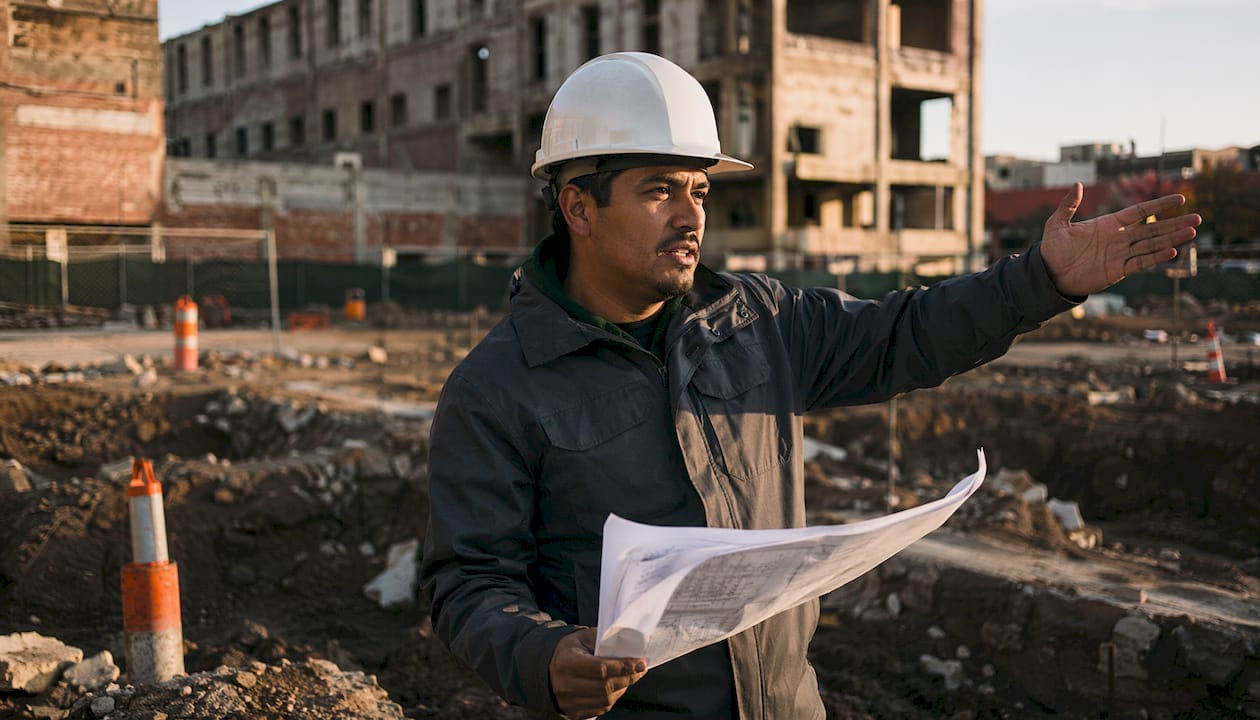
The community benefits are measurable. Brownfield redevelopment increases urban density, revitalizes local tax bases, and improves economic activity in surrounding areas. That means a redeveloped site does not just benefit the developer. It raises property values on adjacent parcels and generates new municipal revenue.
A concrete example: a brownfield project in Cadillac, Michigan plans to deliver 92 rental apartments and commercial space by late 2026. That project shows what phased construction on a contaminated downtown site can produce when planning, funding, and remediation align.
Key benefits Kentucky developers and planners should recognize:
- Existing infrastructure reduces site preparation costs compared to raw land
- Infill locations support smart growth principles by encouraging density and reducing sprawl
- Access to EPA Brownfields grants and state voluntary cleanup programs lowers net remediation costs
- Redevelopment strengthens local tax bases and creates jobs during construction and operation
Pro Tip: Before acquiring a brownfield site in Kentucky, request the property's environmental history from the Kentucky Energy and Environment Cabinet. Known prior uses are the fastest way to estimate contamination risk before spending on formal assessments.
How do brownfield and greenfield sites differ for project planning?
The brownfield vs. greenfield decision shapes every element of a project: cost, timeline, financing, and regulatory exposure. Understanding the distinction early prevents expensive course corrections later.
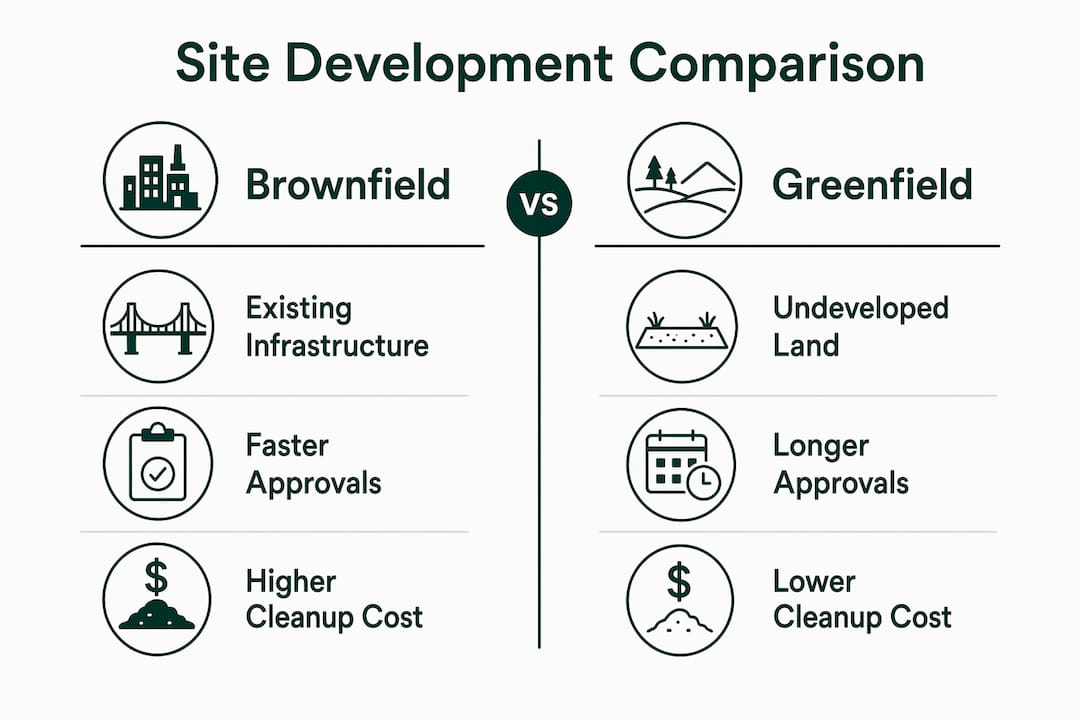
A greenfield site is undeveloped land with no prior industrial or commercial use. It carries no contamination liability but requires full infrastructure installation, including roads, water, sewer, and power. A brownfield site has prior use history, potential contamination, and existing infrastructure connections. The trade-off is real: brownfields carry environmental risk, while greenfields carry infrastructure and policy uncertainty.
Brownfields achieve 20–30% faster planning approvals compared to greenfields. That speed advantage comes from existing zoning classifications, established utility connections, and community support for infill development. Faster approvals reduce carrying costs and compress the timeline to revenue.
A common misconception is that brownfields are always riskier than greenfields. Greenfield projects face their own unpredictable costs: utility extension fees, road construction, and rezoning battles in jurisdictions that resist suburban expansion. Neither site type is inherently safer. The risk profile is simply different.
| Attribute | Brownfield | Greenfield |
|---|---|---|
| Infrastructure | Existing connections, may need upgrades | Full installation required |
| Contamination risk | Present or potential | Minimal to none |
| Planning approval speed | 20–30% faster on average | Slower, often requires rezoning |
| Grant eligibility | EPA and state programs available | Limited federal grant access |
| Location | Urban infill, transit access | Suburban or rural, car-dependent |
| Remediation cost | Variable, requires early assessment | Not applicable |
For Kentucky developers weighing urban infill against suburban expansion, the brownfield option often wins on location value and grant access. The key is quantifying the remediation cost before committing to the acquisition price.
Pro Tip: If speed and predictability are your top priorities, a greenfield may suit your timeline better. But if your project depends on transit access, walkability, or urban amenity premiums, a brownfield in an established Kentucky neighborhood will deliver stronger long-term returns.
What are the key steps in the redevelopment process?
Contaminated site redevelopment follows a defined sequence. Skipping or compressing any phase creates liability exposure and budget overruns.
-
Phase I Environmental Site Assessment (ESA). A licensed environmental professional reviews historical records, aerial photos, and site visits to identify recognized environmental conditions. This step is required by most lenders and takes 2–4 weeks.
-
Phase II ESA. If Phase I identifies concerns, Phase II involves soil sampling, groundwater testing, and laboratory analysis. Results define the contamination type, extent, and remediation pathway. This phase can take 4–12 weeks depending on site complexity.
-
Remediation planning. Based on Phase II findings, an environmental engineer develops a cleanup plan. Remediation timelines vary widely depending on contamination type and agency review requirements. Simple excavation may take weeks. Long-term groundwater treatment can run years.
-
Regulatory submission and agency review. In Kentucky, the Kentucky Voluntary Environmental Remediation Program (VERP) provides a structured pathway for voluntary cleanup. Completing VERP gives developers a certificate of completion that limits future liability. EPA Brownfields grants can fund assessment and cleanup costs within this process.
-
Public and stakeholder engagement. Early engagement with local planning commissions, neighborhood groups, and economic development agencies accelerates approvals. Collaboration with local economic agencies can transform stalled sites into viable assets through grant program access. The Greene County, Pennsylvania example shows that County Industrial Development Authorities and EPA grant programs together can unlock projects that private capital alone cannot fund.
-
Construction and project closeout. Phased construction manages cash flow and allows remediation to proceed in parallel with above-grade work on clean portions of the site.
Pro Tip: Apply for EPA Brownfields Assessment Grants before you finalize your acquisition. Assessment funding covers Phase I and Phase II costs, which reduces your pre-closing due diligence expense and strengthens your negotiating position on purchase price.
What financial and environmental risks should stakeholders expect?
Unknown site conditions are the primary financial risk in contaminated site redevelopment. Developers regularly encounter underground storage tanks, buried debris, and soil contamination that did not appear in Phase I records. Each discovery adds cost and time.
Lenders treat brownfield contamination as a liability that affects collateral value. Securing financing requires early, thorough environmental risk quantification and contingency planning to satisfy lender scrutiny. A developer who arrives at a construction loan closing without a completed Phase II and a remediation cost estimate will face either a loan denial or punishing contingency reserves.
Key financial risks and mitigation strategies:
- Underground storage tanks (USTs): Budget for tank removal and soil testing even when prior records show no tanks. Tanks are frequently unrecorded on older industrial sites.
- Remediation cost overruns: Include a 15–25% contingency on all remediation line items. Fixed-price remediation contracts with licensed contractors reduce exposure.
- Lender hesitation: Engage an environmental attorney early to structure representations and warranties that protect both buyer and lender.
- Tax increment financing (TIF): Many Kentucky cities offer TIF districts for brownfield projects. TIF captures future tax revenue increases to fund current infrastructure costs.
- EPA Brownfields cleanup grants: These grants fund remediation directly, reducing the capital you need to raise from private sources.
The upside is real. Brownfield sites in transit-served urban locations command rent premiums and sale prices that justify remediation costs. A site that costs $500,000 to clean up but sits three blocks from a major employment center will outperform a clean greenfield site 20 miles from the urban core. Connecting with a property management partner early helps developers model rental income projections against remediation and construction budgets.
How can developers and planners apply best practices to succeed?
Successful brownfield projects share a common discipline: they quantify risk early and build the project team before the acquisition closes.
Best practices for Kentucky landowners, developers, and urban planners:
- Conduct thorough due diligence. Order Phase I ESA before signing a purchase agreement, not after. Use findings to negotiate price reductions or seller-funded remediation escrows.
- Engage local economic development agencies. Kentucky's Area Development Districts and the Kentucky Cabinet for Economic Development both connect developers with grant programs and site-specific incentives.
- Use phased construction. Divide the project into clean and contaminated zones. Begin construction on clean areas while remediation continues on affected portions. This approach preserves cash flow and reduces total project duration.
- Align with smart growth and urban renewal policies. Projects that support urban planning goals receive faster approvals and stronger community backing.
- Hire a feasibility consultant before committing capital. A professional feasibility study identifies zoning constraints, environmental risk, market demand, and infrastructure gaps before you spend on design or construction.
Urbanplanningpros provides feasibility studies and land planning services specifically designed to evaluate brownfield sites. Their process reviews property documents, zoning constraints, and market conditions to produce a clear picture of what a site can achieve. For Kentucky developers managing complex sites, that clarity before commitment is the difference between a profitable project and a costly mistake.
Pro Tip: Request a site-specific commercial landscaping assessment as part of your post-remediation planning. Soil stabilization and vegetation management on remediated sites require specialized expertise that standard landscape contractors may not have.
Key Takeaways
Brownfield redevelopment succeeds when developers quantify environmental risk early, secure grant funding through EPA and state programs, and align projects with urban planning goals before committing capital.
| Point | Details |
|---|---|
| Define contamination risk early | Complete Phase I and Phase II ESAs before acquisition to set accurate remediation budgets. |
| Access available grant funding | EPA Brownfields grants and Kentucky VERP reduce net cleanup costs significantly. |
| Brownfields beat greenfields on location | Urban infill sites offer transit access, faster approvals, and stronger rent premiums. |
| Lender scrutiny is real | Quantify environmental liability before approaching construction lenders to avoid delays. |
| Phased construction manages risk | Separating clean and contaminated zones preserves cash flow and compresses timelines. |
What I've learned from working brownfield projects in Kentucky
The most expensive mistake I see developers make is treating brownfield acquisition like a standard real estate transaction. They focus on price per square foot and zoning classification, then discover the environmental liability after the deal closes. At that point, the negotiating leverage is gone.
The developers who succeed treat the Phase I ESA as a negotiating tool, not a compliance checkbox. When Phase I flags a concern, that finding is worth money. A confirmed UST or documented solvent release gives you grounds to demand a price reduction, a seller-funded remediation escrow, or both. I have seen projects where the environmental findings reduced the acquisition price by more than the total remediation cost.
Kentucky has real brownfield opportunity, particularly in smaller cities like Covington, Owensboro, and Paducah, where former industrial sites sit in walkable downtown locations with strong housing demand and limited new supply. The sites are there. The grant programs exist. What most projects lack is the upfront planning discipline to connect those two facts before money changes hands.
The future of brownfield policy in Kentucky points toward more state-level incentives, not fewer. The combination of federal EPA funding and state VERP protections makes this one of the more favorable regulatory environments for contaminated site redevelopment in the country. Developers who build the planning and environmental expertise now will have a significant advantage as more sites come to market.
— Jeremy
Brownfield feasibility planning with Urbanplanningpros
Brownfield projects reward developers who plan before they commit. The environmental, zoning, and market variables on a contaminated site are too complex to evaluate informally.

Urbanplanningpros specializes in feasibility studies that evaluate brownfield sites across Kentucky. Their team reviews property documents, zoning constraints, environmental risk factors, and market conditions to produce a clear development strategy. For developers managing phased construction and regulatory compliance, Urbanplanningpros also provides expert project management services that keep complex projects on schedule and within budget. If you are evaluating a Kentucky brownfield site, a professional feasibility study is the right first step.
FAQ
What qualifies a site as a brownfield?
A brownfield is real property where redevelopment or reuse may be complicated by the presence or potential presence of a hazardous substance, pollutant, or contaminant, as defined by the EPA. Former gas stations, dry cleaners, factories, and rail yards commonly qualify.
What are EPA Brownfields grants and who can apply?
EPA Brownfields grants fund site assessment, cleanup planning, and remediation for eligible communities and developers. The EPA awarded over $270 million to 190 communities in 2026. Nonprofits, local governments, and certain private entities can apply.
What is Kentucky's voluntary cleanup program?
Kentucky's Voluntary Environmental Remediation Program (VERP) allows property owners to voluntarily clean up contaminated sites under state oversight. Completing VERP provides a certificate of completion that limits future environmental liability for the developer.
How long does brownfield remediation take?
Remediation timelines range from a few weeks for simple soil excavation to several years for complex groundwater contamination. The contamination type, remediation method, and agency review schedule all affect the total duration.
Is brownfield redevelopment more expensive than building on a greenfield?
Total costs depend on the site. Brownfields carry remediation costs that greenfields do not, but brownfields avoid full infrastructure installation costs and often qualify for grants that offset cleanup expenses. Urban location premiums frequently make brownfield projects more profitable overall.