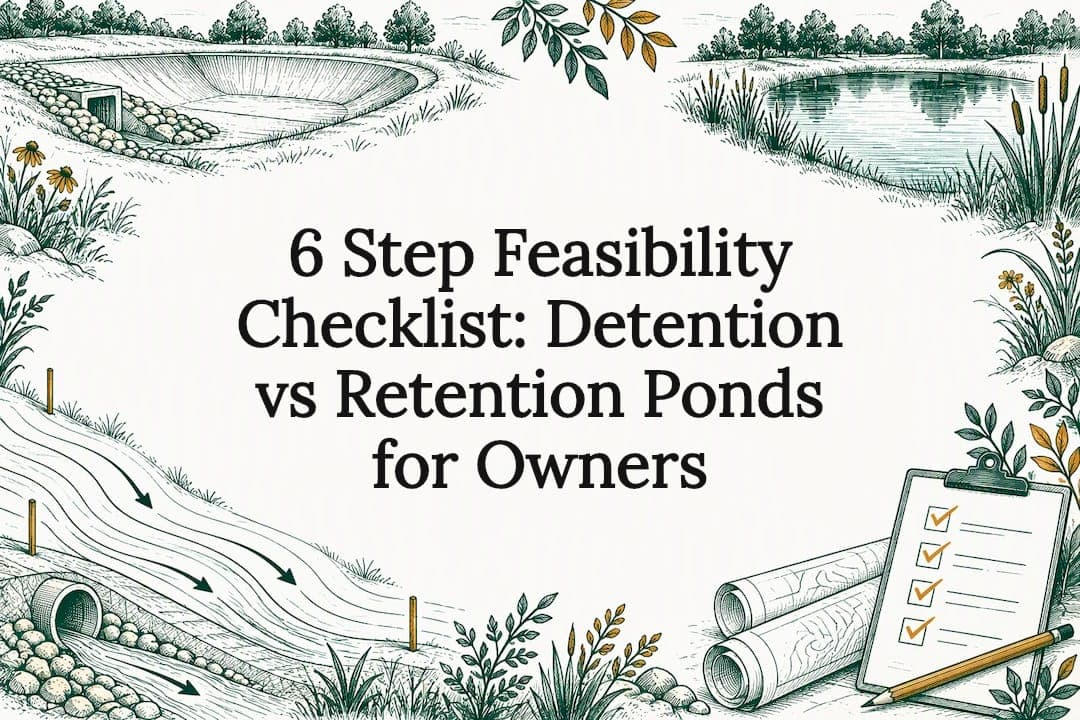
A retention (wet) pond holds a permanent pool and prioritizes water-quality treatment and storage. A detention (dry) pond temporarily holds runoff and prioritizes peak-flow reduction. Both are stormwater management tools recognized in EPA guidance, and both play a role in meeting design targets like water quality volume, or WQv. For landowners weighing site design, a feasibility review from a firm like Urban Planning Pros can clarify which type fits a given parcel before construction begins.
TL;DR:
- Detention ponds are primarily designed to reduce peak stormwater flow and often require less land than retention ponds, making them suitable for flood control.
- Retention ponds offer superior pollutant removal through a permanent pool, but they need more space and ongoing maintenance for vegetation and water quality.
- Hybrid approaches and adjustable outlet designs can help sites meet both flood control and water quality targets without significantly increasing basin size.
- Proper site conditions such as soils, water table levels, and local regulations should drive the choice, with a feasibility review providing critical insights before construction.
- Regular maintenance to prevent sediment buildup, clogged outlets, and mosquito breeding is essential for both pond types to maintain performance and avoid costly failures.
Table of Contents
- Detention vs. retention: quick comparison of purpose and trade-offs
- Detention ponds: dry and extended-detention designs, how they work
- Retention ponds: permanent pools, treatment processes, and variants
- Design trade-offs: water quality volume, flood control, and site constraints
- Maintenance checklist and common failure points
- How to decide which pond fits your site or purchase
- Why a feasibility review matters before choosing a pond design
- What this comparison means for your next decision
- Get help planning stormwater infrastructure on your site
- Sources
- FAQ
Detention vs. retention: quick comparison of purpose and trade-offs
Choosing between the two comes down to what a site needs most: flood control, pollutant removal, or a mix of both. Here is how they stack up on the factors that matter most to landowners and planners.
- Primary purpose: detention ponds slow peak flow during storms; retention ponds treat and store runoff using a permanent pool.
- Treatment effectiveness: retention ponds generally remove more pollutants through sedimentation and biological uptake, according to EPA wet pond guidance; dry detention offers limited treatment by comparison.
- Land footprint: detention basins can be smaller since they do not hold a standing pool; retention ponds typically need more area to maintain permanent water.
- Maintenance load: both require regular sediment removal and outlet checks, but retention ponds add vegetation and water-quality upkeep.
- Mosquito risk: dry ponds that drain within a few days pose lower risk; poorly maintained wet ponds can become breeding habitat if stagnant.
- Amenity potential: retention ponds can double as landscape or recreational features; dry detention basins usually sit empty between storms.
Regulatory drivers for either type often include WQv requirements and channel protection storage standards set by local jurisdictions.
Detention ponds: dry and extended-detention designs, how they work
Dry detention ponds hold stormwater temporarily and release it through a controlled outlet, reducing the peak flow that would otherwise hit downstream channels. According to EPA guidance on dry detention ponds, these basins are designed to drain within a specified window, often between 24 and 72 hours, so they stay empty between storm events.
Extended detention ponds add a treatment function by holding water longer, typically between 12 and 48 hours, before draining fully within a few days. Key design elements include:
- Outlet control structures that regulate release rate and set the drain-down timeline.
- A forebay near the inlet that captures coarse sediment before it reaches the main basin.
- Basin geometry, including a length-to-width ratio that promotes settling rather than short-circuiting flow.
- Site sizing, since dry detention works across a wide range of parcel sizes where a permanent pool is not practical.
The trade-off is treatment capacity. Dry detention removes some sediment but does little for dissolved pollutants, so sites with strict water-quality targets often need added filtration or a different pond type altogether.
Retention ponds: permanent pools, treatment processes, and variants
A retention pond's permanent pool does the work that dry detention cannot: it gives sediment time to settle and lets biological processes break down pollutants before water leaves the site. EPA wet pond guidance describes this permanent pool as the core treatment mechanism, with wet extended-detention ponds adding a layer of temporary storage above the pool for extra capacity during large storms.
Design features that distinguish a well-built wet pond include:
- A micro pool near the outlet that prevents resuspension of settled sediment during discharge.
- A forebay sized to trap incoming sediment before it spreads through the main cell.
- Vegetated buffers along the shoreline that filter runoff and support habitat.
- Adequate depth to limit temperature swings, since shallow pools can warm quickly and affect downstream habitat in sensitive streams.
Retention ponds tend to outperform dry detention where water-quality goals are strict, where a site is being retrofitted for treatment it never had, or where a larger development generates enough consistent flow to sustain a permanent pool. The EPA notes that thermal impacts deserve attention in colder climates or near trout streams, where design adjustments like added shading or modified inlet placement can help.
Design trade-offs: water quality volume, flood control, and site constraints
Every stormwater pond is sized against a target, and the two most common are Water Quality Volume, or WQv, and channel protection storage. WQv represents the runoff volume a pond must capture and treat before it reaches a natural waterway, while channel protection storage addresses the volume needed to prevent erosion downstream. Retention ponds are often sized to hold a meaningful share of WQv in the permanent pool itself, while detention ponds size around peak-flow reduction and drain-down timing.

Site conditions decide which approach is realistic. Soils with poor infiltration and a high water table often favor retention, since the ground already holds water close to the surface. Freeze and thaw cycles can complicate outlet function in colder regions, and available footprint sets a hard limit on whether a permanent pool is even possible.
Designers sometimes blend approaches, using seasonal drawdown schedules, wet extended-detention hybrids, or adjustable outlet sizing to meet both flood control and treatment targets without expanding the basin footprint.
Maintenance checklist and common failure points
Both pond types demand upkeep, and neglect is where most failures start. EPA guidance on dry detention maintenance points to clogged outlets and accumulated sediment as the leading causes of reduced performance and public-health concerns.
- Inspect inlets and outlets after major storms and clear debris promptly.
- Mow or harvest vegetation to keep flow paths open and prevent overgrowth.
- Check spillways for erosion or blockage that could cause overflow.
- Watch for sediment buildup and plan removal when storage capacity drops meaningfully, since guidance recommends dredging once volume loss approaches 25% to 50% of design capacity.
- Confirm drain-down timing stays consistent with the original design to limit mosquito habitat, since most mosquito species need roughly 7 to 10 days of standing water to complete their aquatic life cycle.
Many detention basins sit on private property and fall under HOA responsibility rather than municipal upkeep, according to a homeowner association maintenance guide. Confirming who owns that obligation before problems appear saves real money later.
Pro Tip: Ask for the pond's maintenance and dredging records before assuming an HOA or municipality has kept up with the schedule.
How to decide which pond fits your site or purchase
Whether you're planning a new development or evaluating a home near an existing pond, a short checklist keeps the decision grounded in facts rather than guesswork.
- Define the primary objective. Flood control points toward detention; water-quality treatment points toward retention.
- Assess land area. A permanent pool needs more consistent footprint than a dry basin.
- Check soils and water table. High water tables often favor retention over infiltration-based designs.
- Confirm local regulatory requirements, including WQv targets or minimum detention volumes.
- Weigh budget against maintenance willingness, since wet ponds carry ongoing vegetation and water-quality upkeep.
- Ask the designer or HOA directly about drain-down time, the sediment removal plan, and who holds legal responsibility for repairs.
Why a feasibility review matters before choosing a pond design
Pond selection touches drainage, soils, grading, and sometimes wetland boundaries, which is exactly where a feasibility study earns its cost. A proper review covers grading and drainage analysis, hydrologic and hydraulic sizing calculations, wetland delineation where applicable, a maintenance and responsibility plan, and early flags on cost or constructability issues.
Commissioning this kind of review before finalizing a site plan clarifies which pond type actually fits the parcel, what permitting will require, and where hidden costs might surface later. Such deliverables can be included in feasibility studies and master land planning work to give landowners a clearer picture before capital gets committed.

What this comparison means for your next decision
Detention ponds solve flood timing; retention ponds solve water quality and long-term storage. The right call depends on your site's soils, water table, and regulatory targets, not on which type looks simpler on paper. Before committing to either design, a site feasibility review or hydrologic and hydraulic analysis will tell you far more than guesswork ever could.
— Jeremy Wenger
Get help planning stormwater infrastructure on your site
Choosing between a detention and retention pond gets easier once the site's grading, drainage, and soil conditions are mapped out clearly. Urban Planning Pros offers feasibility studies that evaluate stormwater constraints alongside zoning and market factors, plus grading, drainage and stormwater engineering and wetland delineation services when a pond site borders regulated waters.

First contact typically starts with a review of your property documents and site goals, followed by a scoped plan for the studies you actually need. Visit the services overview to see what fits your project.
Sources
- NPDES: Stormwater Best Management Practice, Wet Ponds (EPA)
- A Homeowner Association Guide to Stormwater Detention Pond Maintenance (Greene County, OH)
FAQ
What are the disadvantages of a detention pond?
Dry detention ponds offer limited treatment for dissolved pollutants compared with wet ponds, since they lack a permanent pool for sedimentation and biological uptake. They also sit empty between storms, which some property owners see as wasted land, and neglected outlets or sediment buildup can quietly reduce their flood-control performance over time.
What is the difference between a wet detention pond and a dry detention pond?
A wet pond maintains a permanent pool of water and treats runoff continuously through sedimentation and biological processes. A dry detention pond drains completely between storms, usually within a set window, and focuses on reducing peak flow rather than ongoing treatment.
Why does Florida have retention ponds everywhere?
Retention ponds suit areas with high water tables and rapid development where permanent storage and on-site pollutant removal are priorities. In regions where soils and groundwater conditions favor holding water at the surface, retention designs are often the more practical stormwater solution.
Should I buy a house near a retention pond?
A retention pond can add landscape value, but buyers should verify who holds maintenance responsibility, whether that's an HOA or a public entity, and check records for dredging, vegetation management, and outlet repairs. Deferred maintenance on a pond can lead to costly fixes and potential liability down the line.