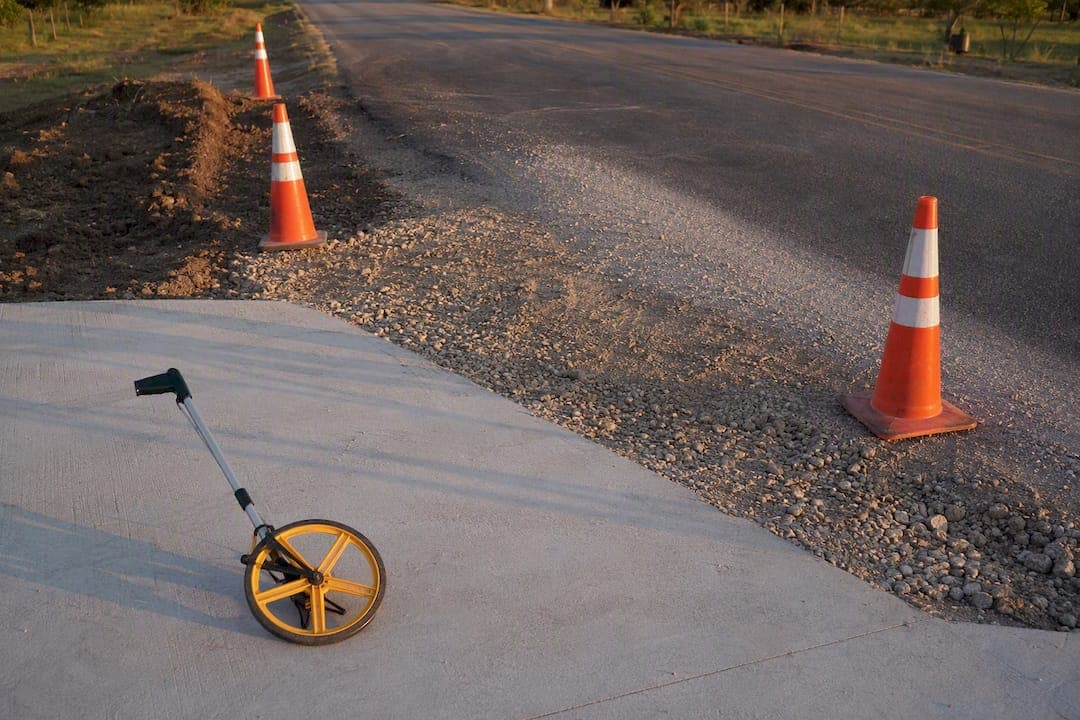
Yes, if your driveway connects to a public road in Texas, you almost certainly need a permit before you break ground. The requirement applies to new access points and to modifications on existing ones, and the office you deal with depends entirely on which road your driveway touches. Get this part wrong and you lose weeks.
The rule splits two ways:
- State highways: TxDOT issues the permit, using Form 1058.
- County or city roads: your local engineering or permits office handles it, with its own application checklist.
Before drawing a single line on a site plan, call your local TxDOT district office or your county's permits desk and confirm jurisdiction. That one phone call prevents almost every downstream delay.
Key Takeaways
Getting a Texas driveway permit approved on the first try depends on confirming jurisdiction early and designing drainage to current standards before submission.
| Point | Details |
|---|---|
| Confirm jurisdiction first | Call your county permits office or TxDOT district before drawing any plans to avoid submitting to the wrong authority. |
| Use the correct form | State highway access requires Form 1058; county and city roads use local application forms and checklists. |
| Design drainage early | Coordinate with district hydraulics on culvert sizing and outfall before finalizing plans to avoid the top cause of denial. |
| Wait for full execution | No construction can start until the permit is fully executed, and 24-hour notification is still required after approval. |
| Verify contractor licensing | Confirm ROW contractor licensing or authorized-agent status before letting anyone pull a permit or start work. |
Official Forms and Permit Resources
- TxDOT Form 1058: the state highway driveway permit application and 24-hour notification rule.
- Texas Administrative Code Title 43: fee structure and access-connection regulations.
- Travis County Driveway Permit page: county checklist and technical standards.
- TxDOT Houston District contractor page: DAP system and drainage criteria.
- Austin right-of-way contractor licensing: ROW license requirements for contractors.
Table of Contents
- Who Issues a Texas Driveway Permit: TxDOT or Your County?
- How Do You Apply for a Driveway Permit in Texas?
- What Causes Most Driveway Permit Denials in Texas?
- What Do Driveway Permits Cost and How Long Do They Take?
- What Documents Do You Need for a Driveway Permit Application?
- Who Can Legally Do Driveway Work in the Right-of-Way?
- Where Urban Planning Pros Fits Into Driveway Permitting
- Why Jurisdiction Confusion Costs You More Than Time
- Sources
Who Issues a Texas Driveway Permit: TxDOT or Your County?
TxDOT governs any driveway that connects to a state highway, and it does so through district offices spread across the state, not a single central desk. Counties and municipalities handle everything else, and some cities have been delegated review authority over roads that would otherwise fall under state rules. That delegation varies by location, so never assume your city automatically controls the road in front of your lot.
- Check the TxDOT district contact page for the county where your property sits.
- Cross-reference with your county's development services or engineering department page.
- If the road has a state highway designation (a number like "FM" or "US"), start with TxDOT, not the city.
Submitting to the wrong office wastes time twice: once waiting for a rejection, then again resubmitting to the correct authority. This is the single most common reason driveway projects stall before construction even starts.
Pro Tip: Pull up your property's road classification on your county's GIS map before contacting anyone. Knowing whether your frontage is a county road or a state highway lets you skip a round of phone tag entirely.
How Do You Apply for a Driveway Permit in Texas?
For state highway access, Form 1058, officially the Permit to Construct Access Driveway Facilities on Highway Right of Way, is the document TxDOT requires. The property owner signs it, or an authorized agent, such as a contractor or engineer, can sign on the owner's behalf if the application includes documentation proving that authorization.
- Confirm jurisdiction with the TxDOT district office or county permits desk.
- Download and complete Form 1058 (state highways) or the equivalent county application.
- Attach supporting site plans and drainage details.
- Submit through the district office in person, by mail, or via the county's online portal where available.
- Wait for full execution of the permit before scheduling any work.
Two rules trip up nearly every applicant who skips them:
- No construction can begin until you have a fully executed permit in hand, not just a submitted application.
- You must give 24-hour notification before starting work, even after approval.
Contractors who show up with equipment the same day a permit clears the mailroom are, technically, working illegally in the right-of-way. Build the notification window into your schedule from day one.
What Causes Most Driveway Permit Denials in Texas?
Drainage kills more driveway applications than any other single factor. Reviewers need to see that your new access point won't redirect stormwater onto the roadway or onto a neighbor's property, and that means positive drainage design coordinated with the district's hydraulics staff, not an afterthought sketched in after the fact.
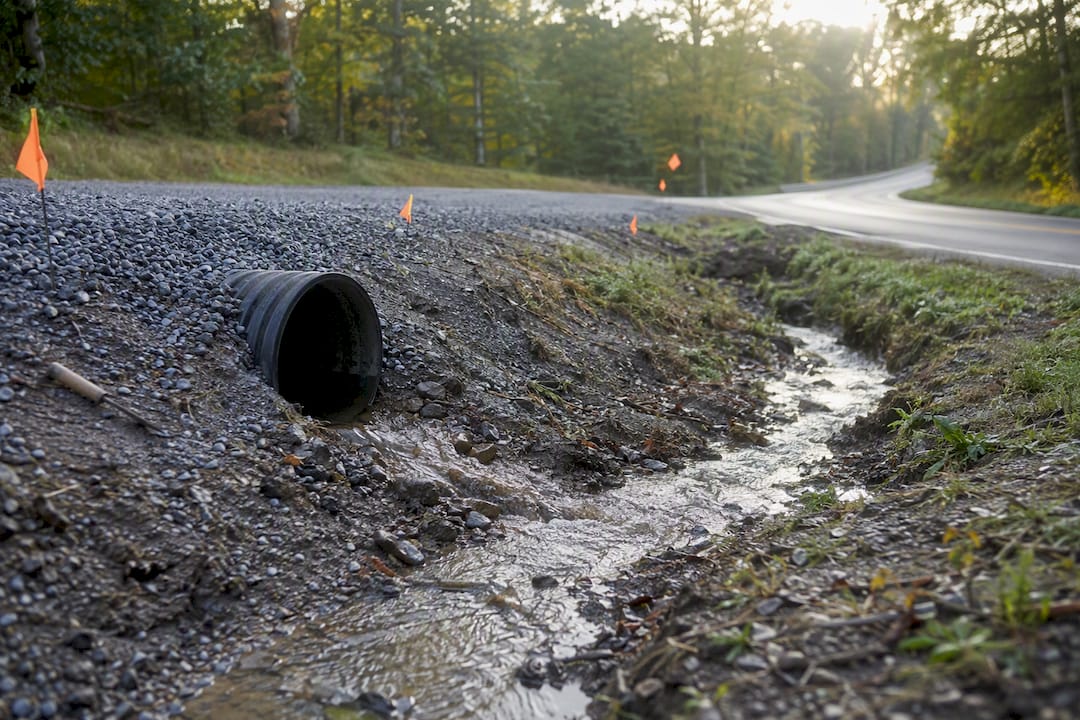
The TxDOT Houston District runs its own Driveway Access Permit (DAP) system and leans on ATLAS 14 rainfall data to set drainage criteria, which tends to be stricter than what applicants expect coming from older rainfall standards. Coordinating with district hydraulics early, before finalizing a design, prevents the kind of rework that can cost weeks.
Reviewers commonly expect plans to show:
- Culvert sizing and placement calculated against current rainfall data, not decades-old assumptions.
- Driveway geometrics, including width, radius, and grade, matching the road classification.
- ADA and TAS compliance details where the driveway crosses a public sidewalk.
Skip any of these and expect a denial letter citing drainage or geometric deficiencies, the two categories that account for the overwhelming majority of first-round rejections.
What Do Driveway Permits Cost and How Long Do They Take?
Fees vary by jurisdiction and by whether the driveway serves a private residence or a commercial use. Under Texas Administrative Code Title 43, TxDOT sets a modest flat fee for private driveways, while commercial access connections are calculated using a different formula tied to the scope of the connection. Counties set their own schedules; expect separate charges for the base application and for any required inspection or re-inspection.
- TxDOT private driveway fees are minimal, but commercial fees scale with project size.
- County fees, like those published by Travis County, often include a base permit charge plus inspection costs.
- Processing typically runs from a couple of weeks to over a month depending on the district's queue and drainage complexity, a range worth tracking against your own permitting timeline.
- Permits carry expiration windows, meaning work must start within a defined period or the permit voids and requires reapplication.
- If your design doesn't meet standard criteria, most jurisdictions offer a variance request process, though appeal procedures differ by county and district.
What Documents Do You Need for a Driveway Permit Application?
A complete packet moves faster through review than one that trickles in piecemeal. Reviewers reject incomplete submissions almost as often as they reject bad drainage designs, and every resubmission adds another cycle to your timeline.
- Completed permit form (Form 1058 for state highways, or the county equivalent).
- A site plan or location sketch showing the property, road frontage, and proposed driveway placement.
- Owner and contact information, plus authorized agent documentation if someone else is signing.
- Drainage details, including culvert size and outfall location.
- A construction sketch with accurate dimensions for width, grade, and materials.
County reviewers, including those at Travis County, also check pavement type requirements, culvert style, setback distances from property lines, and limits on how many driveways a single lot may have.
Pro Tip: Mark your property address clearly on the site sketch. Reviewers process applications faster when they can immediately confirm which parcel and road frontage they're looking at, and Travis County explicitly calls this out in its own checklist.
Who Can Legally Do Driveway Work in the Right-of-Way?
Not every contractor can legally pull a permit or perform work in a public right-of-way. Cities like Austin require a Right-of-Way Contractor's License for anyone working in the ROW, and that license status directly affects who can submit the application and who can physically do the construction.
- Verify your contractor holds a current ROW license or authorized-agent status before signing a contract.
- Require proof of insurance and any required bonding tied to that license.
- Ask for the authorized agent form if the contractor, rather than you, will submit the application.
- Confirm licensing status directly with the city or county, not just by taking the contractor's word for it.
Unlicensed work in the right-of-way can void your permit entirely, leaving you liable for tearing out and redoing the work.
Where Urban Planning Pros Fits Into Driveway Permitting
Driveway permitting rarely stands alone. It usually surfaces during a larger site evaluation, when drainage, access points, and zoning constraints all have to work together before a project can move forward. Urban Planning Pros builds that groundwork through feasibility studies that flag drainage and access conflicts before they become permit denials, and through master land planning that produces permit-ready site plans instead of sketches reviewers send back for revision.
For property owners coordinating directly with TxDOT district hydraulics or a county engineering office, that kind of upfront review cuts down on resubmission cycles considerably. Fewer rounds with reviewers means faster approval and less time with equipment sitting idle waiting on paperwork. If your project involves a commercial access point, a commercial site feasibility review can identify drainage and geometric issues before they reach a district reviewer's desk.
Why Jurisdiction Confusion Costs You More Than Time
The biggest misconception about Texas driveway permitting isn't about drainage or fees. It's the assumption that "my city" automatically controls the road in front of my property. It often doesn't. Plenty of frontage roads that look and feel local carry a state highway designation, and TxDOT, not the city, holds authority over that connection.
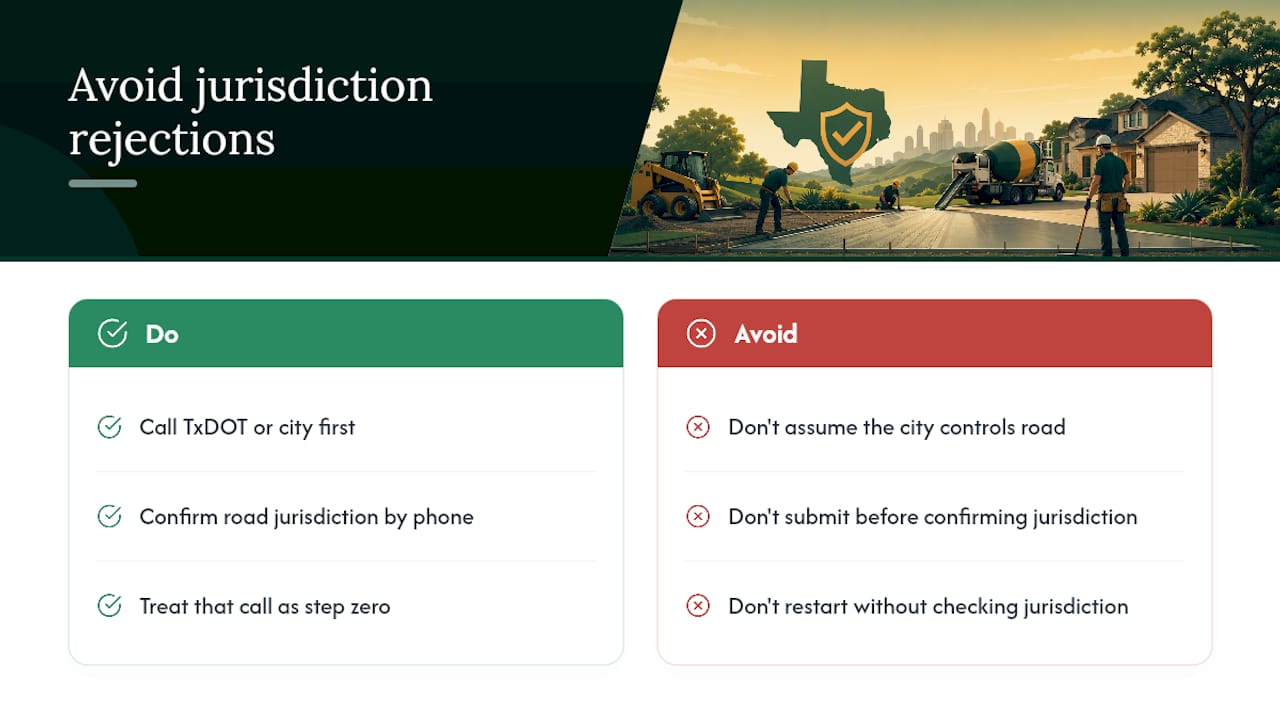
I've seen this play out the same way across different districts: a property owner designs a driveway, submits to the city, gets a rejection weeks later citing lack of jurisdiction, then has to start the entire process over with the correct TxDOT district. That's not a minor inconvenience. It's a full restart on a clock that was already running slow.
The technical stuff, drainage calculations, culvert sizing, ADA ramp geometry, gets most of the attention in permitting guides, and rightly so, since it causes most denials among applications that reach review. But jurisdiction confusion causes denials before review even happens, and it's entirely preventable with a five-minute phone call. Treat that call as step zero, not step one.
— Jeremy
Sources
- Driveway permits, design, and materials (TxDOT Access Management Manual)
- Texas Administrative Code Title 43 — Access connections to state highways (Section 11.59)
- Driveway Permit | Travis County, Texas
- Driveway access permits and drainage guidelines — TxDOT Houston District