
Highest and best use is the legally permissible, physically possible, financially feasible, and maximally productive use of a property, and that conclusion sets its market value and dictates which appraisal method applies. This is the framework every credentialed appraiser applies before selecting a valuation approach, and it's the same framework that separates a landowner who sells too early from one who captures full site value.
Under the standards the Appraisal Institute and IVS publish, a highest and best use study screens every possible use of a site through four sequential tests, in this order:
- Legally permissible — what zoning, covenants, and regulations actually allow
- Physically possible — what the lot, soils, and infrastructure can support
- Financially feasible — what use generates a positive return
- Maximally productive — which feasible use produces the greatest residual value
Skip a step or run them out of order, and the entire analysis collapses. That's why appraisers, lenders, and developers treat this sequence as non-negotiable.
Key Takeaways
Highest and best use determines property value because it decides which appraisal method applies and which comparables, income streams, or costs are relevant to the conclusion.
| Point | Details |
|---|---|
| Four tests run in sequence | Legal, physical, financial, and maximally productive tests must be applied in that order to avoid flawed conclusions. |
| Compare as-vacant to as-improved | Subtract demolition and carry costs from vacant-land value, then compare against current improved value. |
| Financial feasibility uses residual land value | Projected revenue minus construction costs and developer return reveals what the land itself can support. |
| Current use is not automatically HBU | Test existing use against all four criteria rather than assuming decades of use equals highest value. |
| Urban Planning Pros builds defensible HBU studies | Their workflow combines zoning review, market analysis, and financial pro forma into one documented recommendation. |
Table of Contents
- What Is the Industry-Standard Definition of Highest and Best Use?
- How Do the Four Sequential Tests Actually Work?
- Should You Analyze the Property as Vacant or as Improved?
- What Market Research and Math Does the Feasibility Test Require?
- What Do Real Highest and Best Use Examples Look Like?
- What Mistakes Undermine an HBU Conclusion?
- How Does Urban Planning Pros Approach an HBU Study?
- What Is a Real Estate Highest Use Case Study Worth Watching?
- Ready to Commission a Highest and Best Use Study?
- Sources
What Is the Industry-Standard Definition of Highest and Best Use?
The Appraisal Institute defines it as the reasonably probable, legal use of vacant land or an improved property that is physically possible, adequately supported, financially feasible, and results in the highest value. IVS mirrors this language closely, which is why the definition travels consistently across U.S. appraisal reports and international valuation standards alike.
USPAP treats a highest and best use analysis as a prerequisite step, not an optional add-on. The HBU conclusion determines whether the appraiser applies sales comparison, income capitalization, or cost approach, because each method depends on which comparables, income streams, or replacement costs are relevant.
The stakes are concrete:
- A lender relying on an inflated HBU conclusion may finance a project the market can't support.
- A tax assessor who accepts current use as HBU without testing alternatives can undervalue a parcel for years, costing a municipality real revenue.
Courts and eminent domain proceedings lean on this same four-test framework to set compensation, which is one reason a sloppy HBU opinion rarely survives a challenge.
How Do the Four Sequential Tests Actually Work?
Each test exists to eliminate uses that can't survive scrutiny, and the order matters because a use that fails an earlier test never gets evaluated on the later ones. Testing financial feasibility before confirming legal permissibility, for instance, wastes analysis on a use the zoning code already forbids.
- Legally permissible. Start with current zoning, deed restrictions, easements, and environmental overlays. Then ask a harder question: is rezoning reasonably probable? An appraiser can consider a use not currently permitted if there's credible evidence the jurisdiction would approve a change, but "probable" requires documentation, not hope. A pending comprehensive plan update or a pattern of recent approvals nearby counts. A landowner's wish list doesn't.
- Physically possible. Lot dimensions, topography, soil bearing capacity, floodplain status, and utility access all cap what a site can hold. A half-acre infill parcel with steep grade and no sewer connection physically forecloses a mid-rise use no matter how attractive the zoning looks on paper.
- Financially feasible. This is where market demand meets the math. Does the use generate enough revenue or resale value to cover construction costs and clear a developer's required return? Market analysis of absorption rates, rents, and competing supply answers this question, not intuition about what "should" work.
- Maximally productive. Among the uses that survive all three prior tests, which produces the highest residual value to the land? This is frequently misunderstood.
Statistic callout: Maximally productive rarely means highest gross revenue. It usually means the highest residual after construction cost, financing, and the developer's return threshold are subtracted. A dense mixed-use project can pencil to a lower residual than a simpler retail pad if construction costs and absorption risk are high enough.
Should You Analyze the Property as Vacant or as Improved?
Both, and treating this as optional is one of the most common errors in practice. As-vacant analysis asks what a bare parcel would support if the existing structure didn't exist. As-improved analysis asks whether the current structure adds value, subtracts value, or sits somewhere in between relative to that vacant-land conclusion.
The math is straightforward in concept, harder in execution. You compare the vacant-land residual value, minus demolition and site clearing costs, against the value of the property as currently improved. When the vacant-land figure net of demolition exceeds the as-improved value, redevelopment is the financially indicated path. When it doesn't, the existing improvement still carries the property.
Skipping the as-vacant test is exactly how investors overpay for sites they assume are already at their ceiling.
- Demolition costs, hauling, environmental remediation, and carrying costs during the gap between teardown and construction all reduce the vacant-land side of the equation.
- Interim uses, like surface parking or a short-term lease, can be the financially feasible HBU until market conditions catch up to a larger redevelopment plan.
- Excess land (a separately developable portion of a larger parcel) is different from surplus land (extra area that supports the primary use but isn't independently developable), and the two get valued differently.
Pro Tip: Never assume the improvement adds zero value just because redevelopment looks attractive. Run the demolition and carry-cost math explicitly. A property that "looks" ready to redevelop can still fail the test once soft costs are counted.
What Market Research and Math Does the Feasibility Test Require?
Financial feasibility isn't a gut check. It requires a defensible market study and a residual land value calculation that a lender or opposing appraiser can follow line by line.
The market analysis checklist covers:
- Current and projected supply of competing product types
- Demand drivers: population growth, employment trends, migration patterns
- Absorption rates for comparable recent projects
- A defensible set of comparable sales or leases, adjusted for condition and timing
Statistic callout: Residual land value works backward from expected stabilized revenue. Take projected sales or rental income, subtract construction costs and the developer's required return, and what's left is what the land itself can support paying. Compare that residual against the as-improved value, and the higher number wins.
The HBU conclusion isn't just an academic exercise. It decides which appraisal approach applies. Vacant land or a site clearly headed for redevelopment points toward sales comparison or cost approach analysis. An income-producing property at its highest and best use points toward income capitalization. Get the HBU wrong, and the entire valuation built on top of it is wrong, with real consequences for loan sizing and property tax bills.
What Do Real Highest and Best Use Examples Look Like?
Three scenarios show how the tests actually change outcomes:
- The infill lot. A single-family home sits on a parcel now zoned for duplex or triplex use following a recent zoning update. The legal test passes. The physical test depends on lot width and setback compliance. If both clear, the financial test almost always favors multifamily in a tight rental market, since two or three units nearly always produce a higher residual than one.
- The commercial corridor house. A modest residential structure fronts a road that's been rezoned commercial. As-improved value as a house might run $180,000. As-vacant commercial land value, minus $15,000 in demolition costs, might support a residual of $310,000. Redevelopment is the clear highest and best use here.
- The special-purpose property. A church or a purpose-built industrial facility often fails the financial feasibility test for conversion, since retrofit costs exceed what an alternative use would support. Current use frequently remains the highest and best use by default, not by analysis shortcut.
What Mistakes Undermine an HBU Conclusion?
The most expensive mistake is assuming current use equals highest and best use without testing it. A property owner who's held land for twenty years often anchors on the existing use out of habit, not analysis.
- Never treat "it's always been a house" as evidence. Test it against the four criteria every time.
- Never omit demolition and carrying costs when comparing as-vacant to as-improved value; that omission alone can flip a conclusion.
- Never claim rezoning is "probable" without documentation. A single supportive comment from a planning staffer isn't reasonable probability.
- Always document the market data, comparable sales, and cost assumptions behind the financial feasibility conclusion, since a defensible HBU opinion survives scrutiny from lenders, assessors, and opposing counsel.
How Does Urban Planning Pros Approach an HBU Study?
Urban Planning Pros runs highest and best use analysis as a structured workflow, not a one-off opinion. The process moves through document and zoning review, market study, and financial pro forma before landing on a recommendation the client can act on.
- Document and zoning review: title, covenants, entitlements, and jurisdictional constraints get mapped first
- Market study: current demand, competing supply, and absorption trends specific to the site's submarket
- Financial pro forma: residual land value modeling against realistic construction costs and return thresholds
- Recommendation: a written conclusion tying the four tests to a defensible use determination
A feasibility study that combines zoning review, market analysis, and residual pro formas turns HBU theory into a decision a landowner or lender can actually rely on, rather than a theoretical exercise that sits in a file.
This mirrors the same discipline behind Urban Planning Pros' redevelopment constraint reviews, where site limitations get identified before capital is committed.
What Is a Real Estate Highest Use Case Study Worth Watching?
Highest and best use conclusions rarely stay fixed. A parcel zoned strictly residential in one decade can flip to mixed-use potential the next, once a transit line, a zoning overlay, or a shift in absorption changes the math entirely.
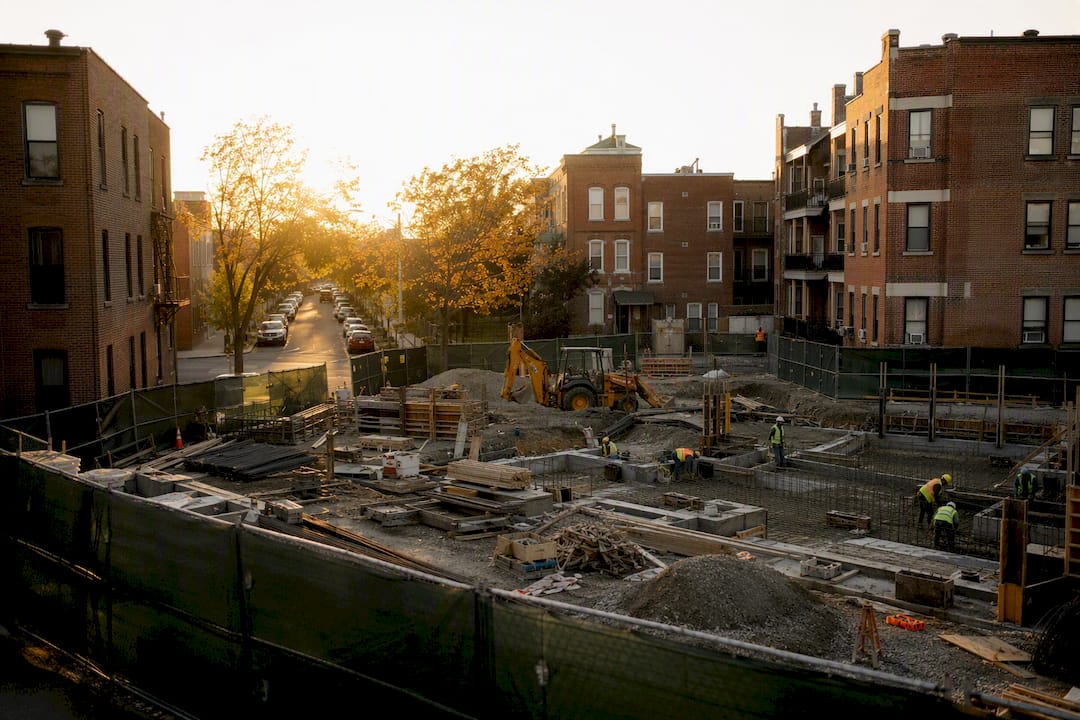
The conventional advice treats HBU as a checkbox exercise: run the four tests, name a use, move on. That advice undersells the hardest part of the job, which is the financial feasibility test. Legal and physical tests are largely binary. Financial feasibility requires judgment about absorption, construction cost trends, and what a developer's return hurdle actually needs to be in a given submarket, and that judgment is where most flawed conclusions originate.
If there's one place readers should focus first, it's demolition and carry-cost math on the as-vacant side of the analysis. That's the calculation most often skipped, and it's the one most likely to flip a conclusion from "keep the improvement" to "redevelop the site." Residual land value thinking, done honestly, is a better predictor of real outcomes than any density bonus or zoning aspiration on its own.
— Jeremy
Ready to Commission a Highest and Best Use Study?
If you're weighing whether to hold, sell, or redevelop a parcel, running the four tests yourself with rough math is a reasonable starting point, but a defensible conclusion for a lender, investor, or tax appeal requires documented market data and a real pro forma behind it. Urban Planning Pros builds that documentation as its core service, combining zoning review, market analysis, and residual land value modeling into one feasibility study rather than leaving you to piece together spreadsheets and zoning code on your own.

This fits landowners sitting on a parcel that's outgrown its current use, developers underwriting a site before closing, and investors who need a defensible number before a lender or partner will move forward. If your property sits at a point where the zoning, the market, or the surrounding corridor has shifted since the current use was established, that's exactly when a formal study earns its cost. Start by requesting a feasibility study scoped to your parcel, or review Urban Planning Pros' land planning services to see how the process fits your project stage.
Sources
- What is Highest and Best Use in Appraisal? - McKissock Learning
- Highest-Best-Use Analysis - WorkingRE
- Highest and Best Use: Definition and the Four Tests - LegalClarity
- Part 6 - Our guide to highest and best use in real estate - Altus Group