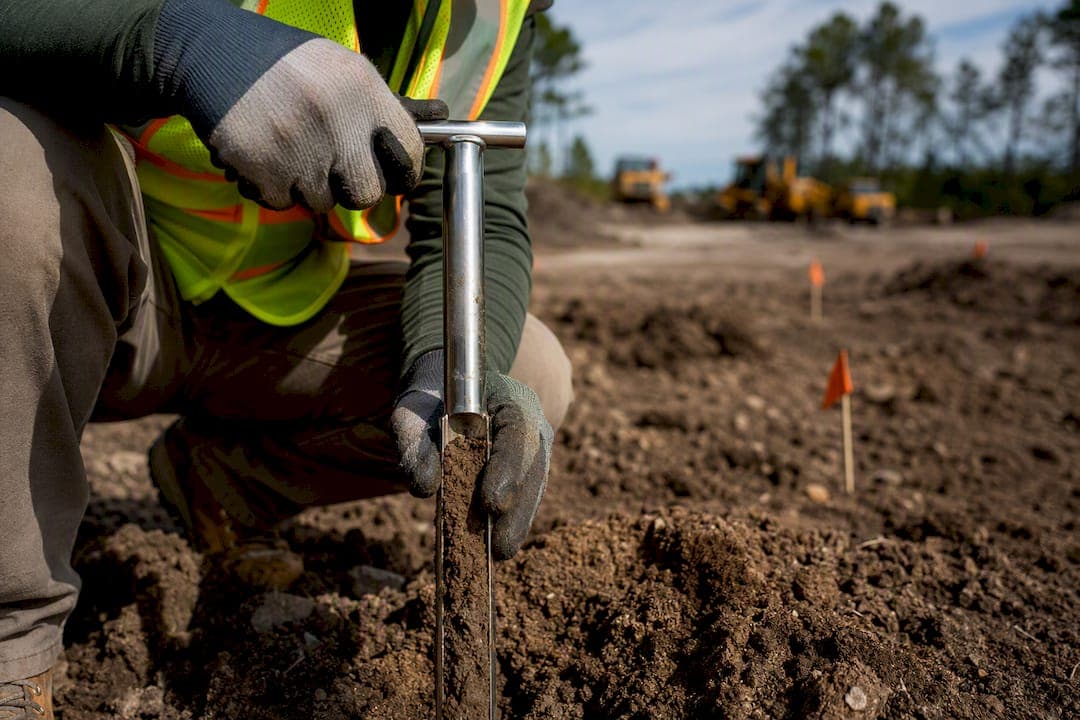
A Phase I Environmental Site Assessment is a non-intrusive records review and site walk that flags potential contamination. A Phase II ESA is intrusive testing that confirms whether contamination actually exists. Order a Phase I first. Only budget for a Phase II if that report identifies a recognized environmental condition (REC) or a lender requires it.
- Purpose: Phase I identifies risk; Phase II confirms and quantifies it.
- Methodology: Phase I is document research and a site visit; Phase II involves soil, groundwater, or vapor sampling.
- When ordered: Phase I happens during due diligence on nearly every commercial deal; Phase II only follows a specific trigger.
Both processes trace back to the same regulatory framework: ASTM E1527 governs Phase I methodology, and a compliant report helps satisfy All Appropriate Inquiries (AAI) under CERCLA, the federal law that determines who bears cleanup liability. Get the Phase I done, read it carefully, and let the findings tell you whether Phase II is even necessary.
Key Takeaways
A Phase I ESA identifies environmental risk through records and inspection, while a Phase II confirms and quantifies contamination through sampling, and buyers should order Phase I first every time.
| Point | Details |
|---|---|
| Phase I comes first | Order a non-intrusive Phase I before ever budgeting for intrusive Phase II testing. |
| RECs drive Phase II | Only recognized environmental conditions found in Phase I justify moving to sampling. |
| AAI protects buyers | An ASTM-compliant Phase I helps satisfy All Appropriate Inquiries for CERCLA liability defense. |
| Costs scale with scope | Phase I runs $1,000 to $6,000; Phase II can reach $5,000 to $50,000 or more. |
| Plan environmental work early | Urban Planning Pros integrates ESA findings into feasibility studies before entitlement decisions lock in. |
Table of Contents
- What Does an ESA Do in a Real Estate Transaction?
- Phase I Environmental Site Assessment: Scope, Process, and Report Contents
- Which Phase I Findings Commonly Trigger a Phase II?
- Phase II Environmental Site Assessment: Sampling Methods, Analysis, and Deliverables
- How Do ESA Results Affect Financing and Liability?
- How Do You Choose the Right Environmental Professional?
- Typical Costs and Timelines for Phase I and Phase II ESAs
- If Phase II Confirms Contamination, What Happens Next?
- Publisher Perspective: How Land Planning Teams Use ESA Reports
- How Urban Planning Pros Supports Your ESA Process
- Standards and Guidance Worth Reading
- Frequently Asked Questions
- Sources
What Does an ESA Do in a Real Estate Transaction?
An Environmental Site Assessment is the due diligence step that answers one question: could this land hold hidden contamination that costs you money or exposure later? Phase I and Phase II are sequential stages of that same investigation, not competing options.
- Phase I is non-intrusive: no drilling, no sampling, just records, history, and observation.
- Phase II is intrusive: soil borings, monitoring wells, lab analysis.
- Common triggers include lender requirements on commercial loans, buyer-requested due diligence, and pre-development permitting.
The EPA's guidance on assessing brownfield sites frames Phase I as the tool that determines potential liability, with a Phase II reserved for cases where that first look raises a red flag.
Phase I Environmental Site Assessment: Scope, Process, and Report Contents
A Phase I ESA exists to identify recognized environmental conditions through records research and a site inspection, not through sampling. Its job is to answer whether contamination is likely, based on what the property has been used for and what regulators already know about it.
The process follows a fairly consistent sequence:
- Records review: deeds, historical land use, prior environmental reports.
- Regulatory database search: state and federal contamination and violation records tied to the property and nearby parcels.
- Historical use review: aerial photos, city directories, and fire insurance maps going back decades.
- Site reconnaissance: a walk-through looking for staining, odors, storage tanks, drums, or signs of dumping.
- Interviews: with owners, occupants, and local government staff who know the site's past.
- The report itself: findings organized into RECs (recognized environmental conditions), CRECs (controlled RECs, meaning a past issue with documented, regulator-approved controls), and HRECs (historical RECs that have since been resolved to current standards).
Only a qualified environmental professional, as defined under AAI regulations, can sign off on a Phase I that holds up for CERCLA liability protection. That credential requirement isn't paperwork for its own sake. If the person who wrote the report doesn't meet the environmental professional standard, the entire liability defense the report was supposed to provide falls apart.
A complete Phase I report should include an executive summary, a description of the site and surrounding area, a summary of findings organized by REC category, and a clear recommendation on next steps, including whether a Phase II is warranted.
Pro Tip: Ask for the report's REC section before you ask about price. A one-page summary with vague language ("further investigation may be warranted") tells you less than a report that names the specific parcel, past use, and distance to a documented release.
Phase I ESAs typically run $1,000 to $6,000 and take two to four weeks, depending on property size, record availability, and how far back the historical research needs to go.
One timing detail catches buyers off guard: an ASTM-compliant Phase I doesn't stay valid indefinitely. Several of its components need refreshing if more than 180 days pass between the report and closing, or if the intended use of the property changes. A Phase I done for a straight resale doesn't automatically cover a rezoning to industrial use six months later.
Which Phase I Findings Commonly Trigger a Phase II?
A Phase II isn't automatic. It gets triggered by specific recognized environmental conditions the Phase I turns up, not by the mere existence of a Phase I report.
The most common triggers include:
- Evidence of old underground storage tanks (USTs), active or removed.
- Staining, discoloration, or odors in soil or pavement during the site walk.
- Suspicious fill material with no documented source.
- Historical industrial, dry cleaning, or gas station use on the parcel.
- Nearby documented releases within a distance that could affect the subject property.
- Data gaps in historical records that leave a use or time period unaccounted for.
A property that operated as a dry cleaner in the 1970s but shows no current issues might warrant a limited Phase II focused on soil near the old equipment pad, rather than a full-site investigation. A parcel with a documented UST removal and no closure letter from the state, on the other hand, usually needs groundwater sampling before any lender will move forward.
Pro Tip: A Phase I that flags "data gaps" rather than an actual REC sometimes just needs more research, not a Phase II. Ask your environmental professional whether the gap is fillable through additional records before assuming intrusive testing is required.
Phase II Environmental Site Assessment: Sampling Methods, Analysis, and Deliverables
A Phase II exists to confirm whether contamination is actually present and, if so, how much and where. This is the scientific verification step that Phase I's records review cannot provide.
The sampling method depends entirely on what the Phase I flagged:
- Soil borings test for contamination in the ground itself, often near old tank locations or stained areas.
- Groundwater monitoring wells track whether contamination has migrated into the water table, especially relevant near documented releases.
- Soil vapor sampling checks for vapor intrusion risk, increasingly required for sites near dry cleaners or gas stations where volatile compounds are a concern.
- Building material sampling covers asbestos and lead, typically for older structures slated for renovation or demolition.
The sampling plan itself gets built directly from the Phase I's findings. If the REC is a former UST location, borings cluster around that footprint. If it's a documented off-site release, wells get placed along the likely groundwater flow path. Every sample follows a documented chain-of-custody from the field to an accredited lab, with quality assurance and quality control protocols that make the results defensible in a transaction dispute or regulatory filing.
Reading the results comes down to comparing lab data against state or federal regulatory screening levels for the contaminant in question. An "exceedance" means a sample came back above that threshold, which generally triggers further delineation, a risk assessment, or a cleanup plan, depending on the contaminant and its concentration.

Phase II costs and timelines vary far more than Phase I. Costs range from roughly $5,000 to $50,000 or more, scaling with the number of samples, drilling access, and the range of lab analyses required. Timelines commonly stretch several weeks to a few months, since lab turnaround alone typically runs two to three weeks for standard analyses, on top of drilling permits and site access scheduling.
Expect a Phase II deliverable to include data tables comparing results to screening levels, site maps marking sample locations, contamination extent sketches (sometimes called plume maps for groundwater), and a written recommendation on whether further action is needed. For sites with wetland features, findings may connect directly to a wetland delineation if water resources are part of the picture.
How Do ESA Results Affect Financing and Liability?
A Phase I that meets ASTM standards and satisfies AAI gives buyers access to liability defenses under CERCLA, meaning the buyer isn't automatically on the hook for contamination that existed before they took title. Phase II results, when they show contamination, can change the entire economics of a deal.
Once findings come back, buyers and sellers generally have a set of practical moves:
- Renegotiate the purchase price to reflect cleanup costs.
- Set aside remediation funds in escrow at closing.
- Require the seller to remediate before the deal closes.
- Add lender-required conditions tied to future testing or monitoring.
- Purchase environmental insurance to cover residual risk.
- Walk away from the deal entirely if the exposure outweighs the property's value.
A Phase I satisfies AAI when it follows ASTM E1527 and is performed by a qualified environmental professional. That compliance is what stands between a buyer and inherited liability for contamination they didn't cause. Skip the standard, and the liability defense may not hold up if a regulator or a court ever looks at it.
Buyers sometimes use a limited-scope Phase II strategically. Confirming the absence of contamination near a single area of concern can unlock a closing without the cost of a full-site investigation.
How Do You Choose the Right Environmental Professional?
Choose a licensed, experienced environmental professional who documents their methods to ASTM and AAI standards, because the report is only as strong as the person who signs it. A cut-rate Phase I from someone who skips required elements isn't cheaper, it's just riskier.
Before hiring, check for:
- Experience with your specific state's regulatory database systems.
- A track record of Phase II fieldwork, not just desktop Phase I reports.
- Established laboratory partnerships with reasonable turnaround times.
- Adequate professional liability insurance.
- A sample report you can review for depth and clarity before signing on.
During the interview or RFP process, ask direct questions:
- How will you scope the sampling plan if a Phase II becomes necessary?
- What's the realistic timeline given current field and lab conditions?
- What QA/QC protocols do you follow for chain-of-custody?
- What factors typically drive cost overruns on projects like this one?
Pro Tip: An unusually low bid on a Phase I is often a red flag, not a bargain. Vague sampling plans, no referenced standards, and no mention of chain-of-custody procedures usually mean corners get cut exactly where they matter most.
Typical Costs and Timelines for Phase I and Phase II ESAs
| Item | Phase I ESA | Phase II ESA |
|---|---|---|
| Typical cost | $1,000–$6,000 | $5,000–$50,000+ |
| Typical timeline | 2–4 weeks | Several weeks to a few months |
| Core deliverable | Records-based report with REC findings | Lab data, sample maps, contamination extent |
| Main cost driver | Property size, record depth | Sampling scope, drilling access, lab analyses |
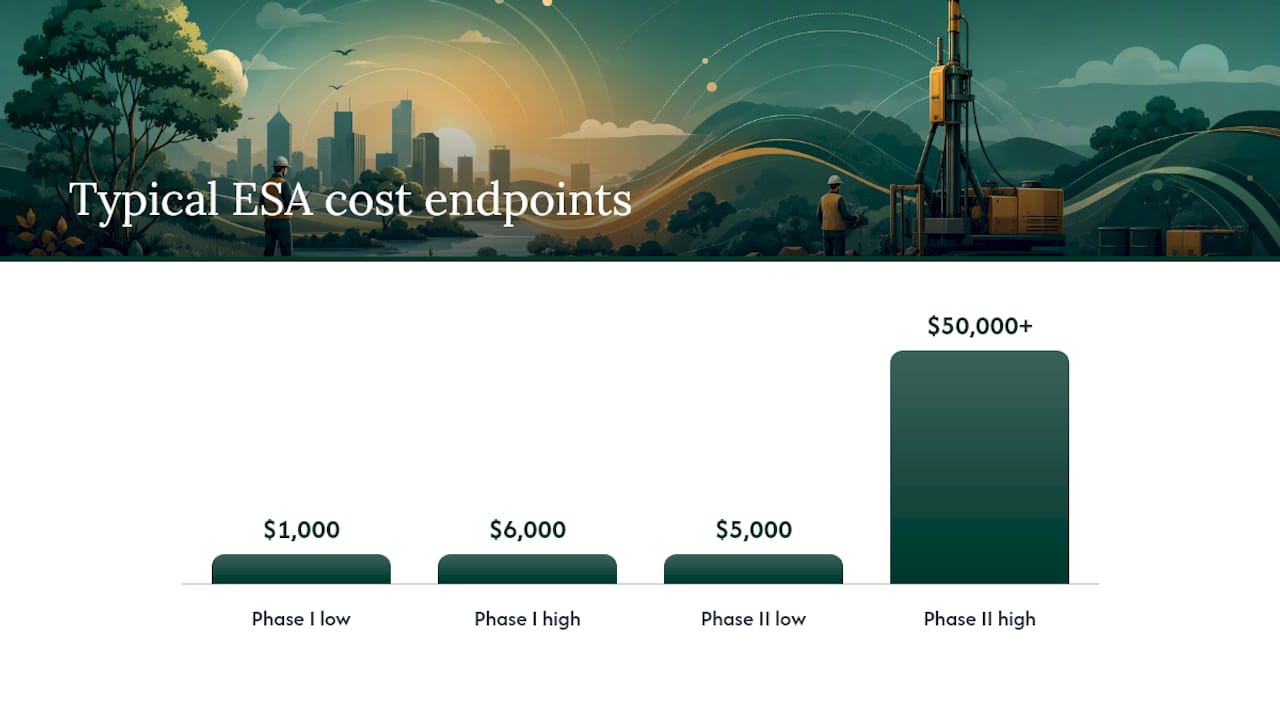
These ranges come from current market data on Phase I and Phase II costs. Actual figures shift with site size, physical access for drilling equipment, the number of contaminants tested, and seasonal constraints that can delay fieldwork or lab scheduling.
If Phase II Confirms Contamination, What Happens Next?
Confirmed contamination leads to one of three broad paths: no further action if levels fall below screening thresholds, risk management through controls or insurance, or full remediation. Each path carries different cost and timing consequences for the deal.
Depending on the findings, next steps typically include:
- Further delineation to map the full extent of contamination.
- A formal risk assessment weighing exposure pathways and public health impact.
- A cleanup plan filed with the state, sometimes through a voluntary cleanup program.
- Institutional controls, such as deed restrictions limiting future use.
For buyers and sellers, the negotiation usually centers on:
- Who pays for remediation, and whether it happens before or after closing.
- Whether escrowed funds cover the estimated cleanup cost with a buffer.
- Whether a state voluntary program can reduce liability exposure for the new owner.
Publisher Perspective: How Land Planning Teams Use ESA Reports
The biggest timing mistake we see is ordering a Phase I after a site plan is already locked in. Fold environmental due diligence into the feasibility phase before entitlement work begins, not after. Urban Planning Pros uses Phase I and Phase II outputs to adjust site plans, cost models, and phasing before those numbers get baked into a pro forma that's hard to unwind later.
How Urban Planning Pros Supports Your ESA Process
Environmental findings rarely stay isolated from the rest of your project. A REC that shows up in a Phase I can shift setbacks, buildable area, or phasing long before anyone drills a soil boring. Urban Planning Pros folds Phase I and Phase II outcomes directly into feasibility studies, so the environmental picture and the site plan get built together instead of colliding later.

Our team coordinates environmental professionals, interprets Phase II data in the context of your development plan, and manages remediation scopes as part of a broader feasibility engagement, so you're not juggling separate consultants who never talk to each other. Whether you're evaluating a parcel with a documented UST or trying to understand how a contamination finding changes your buildable footprint, start with a feasibility study built around your specific site and its environmental history.
Standards and Guidance Worth Reading
- ASTM E1527: the governing standard for Phase I ESAs and AAI compliance.
- EPA brownfield site assessment guidance: federal procedural guidance and CERCLA liability context.
Frequently Asked Questions
What's the main difference between Phase 1 and Phase 2 ESA? Phase I is a non-intrusive records review and site visit that identifies potential contamination risk. Phase II is intrusive testing, sampling soil, groundwater, or building materials, that confirms whether contamination actually exists.
Do I always need a Phase II after a Phase I? No. A Phase II only becomes necessary if the Phase I identifies a recognized environmental condition or a lender specifically requires further investigation. Many transactions close with just a Phase I.
Who pays for a Phase I or Phase II ESA? It varies by deal structure, but buyers commonly pay for due diligence assessments they order, while sellers sometimes cover Phase II costs when contamination stems from their period of ownership and gets negotiated into the purchase agreement.
How long does a Phase I ESA stay valid? Several components need updating if more than 180 days pass between the report date and closing, or if the property's intended use changes significantly.
Can a Phase I alone protect me from environmental liability? An ASTM-compliant Phase I performed by a qualified environmental professional helps satisfy All Appropriate Inquiries under CERCLA, which supports certain liability defenses, though protection ultimately depends on meeting all AAI requirements, not just completing the report.
This article is general information, not a substitute for advice from a qualified lawyer. Consult a qualified legal professional about your own circumstances before acting on anything here.
Sources
- Assessing Brownfield Sites (EPA)
- Phase 1 vs Phase 2 ESA: Key Differences Explained
- What’s the Difference Between a Phase I and a Phase II Environmental Site Assessment (ESA)? (RMA Green)
- ASTM E1527-13