
A pre-application meeting is a voluntary or required consultation where planning staff review your concept before you file a formal application, flagging zoning conflicts, missing studies, and the likely review path. Its value is timing: catching a setback issue now costs a redrawn site plan; catching it after submittal costs months. Requesting one usually starts with a short form or portal upload through your jurisdiction's planning department.
TL;DR:
- Asking for a pre-application meeting early can identify site constraints and departmental conflicts, saving months of redesign and review delays later.
- Coordinating multiple departments during a single multi-discussion session reveals conflicts like easements or zoning issues that otherwise surface in separate reviews.
- Preparing a clear concept site plan, project description, and scaled sketches before the meeting increases the likelihood of receiving actionable feedback.
- Missing the jurisdiction's application window after a pre-app triggers extra delays, often requiring repeating the process and paying additional fees.
- Staff comments are advisory and non-binding; realistic meeting expectations depend on the level of project detail and proper team preparation.
Table of Contents
- What Is a Pre-Application Meeting and Why Does It Matter?
- Who Attends and What Do They Cover?
- When Is a Pre-Application Meeting Required, and What Does It Cost?
- How Do You Prepare for a Productive Pre-Application Meeting?
- What Happens During and After the Meeting?
- How Planning Consultants Add Value at Pre-Application Meetings
- What Do Successful Pre-Application Meeting Outcomes Look Like?
- What Pitfalls Should You Avoid in a Pre-Application Meeting?
- How Does a Pre-Application Meeting Affect Your Overall Timeline?
- Realistic Expectations Matter More Than Perfect Answers
- Get Expert Help Preparing for Your Pre-Application Meeting
- Where to Check Local Pre-Application Rules and Portals
- Sources
What Is a Pre-Application Meeting and Why Does It Matter?
Some jurisdictions make pre-application meetings mandatory for certain project types. Others treat them as optional, though skipping one on a complex project is rarely wise. Either way, the meeting exists because municipalities have learned that front-loading review saves everyone time. Staff would rather flag a drainage conflict during an informal sit-down than discover it three weeks into a formal review clock.
Municipal planning departments generally use these sessions to:
- Reduce late-stage surprises by identifying site constraints early
- Scope which technical departments need to weigh in on your specific project
- Advise whether your proposal is likely headed for administrative approval or a public hearing
None of this is a green light. Staff comments at a pre-application meeting are guidance, not a decision. Maricopa County's own guidance makes clear that a governing body can still overturn staff recommendations at formal review, so treat every comment as a preview, not a promise.
Who Attends and What Do They Cover?
A single planner rarely runs these meetings alone once a project has any complexity. Maricopa County's process, for example, pulls in reviewers from comprehensive planning, current planning, drainage, environmental services, flood control, and transportation, depending on what your site touches.
Expect representation from some combination of:
- A zoning or current planning reviewer checking use, setbacks, and density
- A transportation or traffic engineer assessing access points and trip generation
- A drainage or stormwater reviewer evaluating runoff and detention needs
- A utilities representative confirming water, sewer, or capacity constraints
- A building official flagging code issues that intersect with site design
The more departments in the room, the more valuable the meeting, because conflicts between disciplines (a drainage easement that blocks your preferred access point, for instance) surface immediately instead of in round two of comments.
Pro Tip: Ask the scheduling coordinator in advance which departments will attend. If transportation isn't on the list and your project adds significant trip volume, request they be added before the meeting, not after.
When Is a Pre-Application Meeting Required, and What Does It Cost?
Triggers vary by jurisdiction, but the pattern is consistent: the bigger and more complex the project, the more likely a pre-app is mandatory rather than optional. Common triggers include rezonings, preliminary plats, large additions, and any application type a jurisdiction has flagged as requiring interdepartmental coordination.
Fees swing widely across markets:
- Some cities, including Colorado Springs, offer the meeting free of charge
- Others charge a flat fee. Pittsburgh sets its pre-application meeting fee at $250
- Larger jurisdictions running multi-step consultation processes, such as Toronto's pre-application consultation process, can charge substantially more for larger projects, though that example reflects a Canadian framework rather than typical U.S. practice
Scheduling has a rhythm worth planning around. Colorado Springs, for one, contacts requesters within two working days and schedules the meeting within seven. After the meeting, most jurisdictions set a window to submit your formal application before a new pre-app may be required. Miss that window and you start the clock over.
How Do You Prepare for a Productive Pre-Application Meeting?
Vague questions get vague answers. A blank sketch on a napkin gets a shrug. The single biggest lever you control going into this meeting is the quality of what you bring, since clearer conceptual site plans tend to trigger more specific interdepartmental review before staff even sits down with you.
Here's the minimum packet worth assembling:
- A concept site plan or diagram showing building footprint, access points, parking, and rough setbacks
- A written project description covering use, unit count or square footage, and phasing if relevant
- Scaled sketches or measurements rather than freehand drawings, even if they're preliminary
Pair that packet with a short, prioritized question list. Ask which studies (traffic, drainage, environmental) will likely be required, whether your project is headed toward administrative review or a public hearing, and what specific zoning provisions could constrain your concept. Uploading materials to the city's portal in advance gives staff time to actually review before you're in the room, rather than skimming while you talk.
Bring the people who can answer follow-up questions on the spot. If your engineer or architect can't attend, at least brief them beforehand so you're not promising answers you can't deliver.
Pro Tip: Practice a 3 to 5 minute verbal summary of your project before the meeting. Staff sit through dozens of these sessions, and a tight opening framing gets you further into substantive questions before time runs out.
What Happens During and After the Meeting?
Most pre-application meetings run 30 to 60 minutes, though complex multi-department sessions can run longer. Expect a walkthrough of your materials, department-by-department comments, and a closing summary of what staff sees as the biggest open questions.
Typical outputs include:
- A planning application checklist listing required documents and studies
- Referrals to technical committees, such as a land development technical committee, if your project needs deeper review
- A preliminary read on whether you're headed for administrative approval or a public hearing
None of it is binding. Staff feedback reveals what could delay or derail your project at formal review, but it's advisory, and the final decision rests with whatever board or department has approval authority. You'll still need to submit a complete formal application within your jurisdiction's deadline window to act on anything discussed.
How Planning Consultants Add Value at Pre-Application Meetings
Hiring a consultant makes the most sense when zoning is ambiguous, multiple agencies need coordinating, or the project's cost makes a redesign expensive to absorb. A consultant's job at this stage isn't to talk for you. It's to make sure the materials in front of staff are specific enough to generate specific answers.
A well-prepared engagement typically produces:
- A feasibility memo identifying the zoning and site constraints most likely to surface in review
- A concept plan detailed enough to trigger real interdepartmental comments instead of generic caveats
- A tailored question list built around your project's actual risk points, not a generic template
Urban Planning Pros builds exactly these materials as part of its feasibility studies and land planning work, and clients who walk in with a refined concept plan consistently get more actionable comments than those who show up with a rough idea and hope.
What Do Successful Pre-Application Meeting Outcomes Look Like?
The best outcomes rarely feel dramatic in the room. A developer proposing a mixed-use infill project, for example, might walk in expecting a straightforward administrative review and learn instead that the parcel's frontage triggers a mandatory traffic impact study. That's not bad news. It's exactly the kind of finding a pre-app exists to surface, because now the traffic study gets scoped and started months before it would otherwise become a submittal bottleneck.
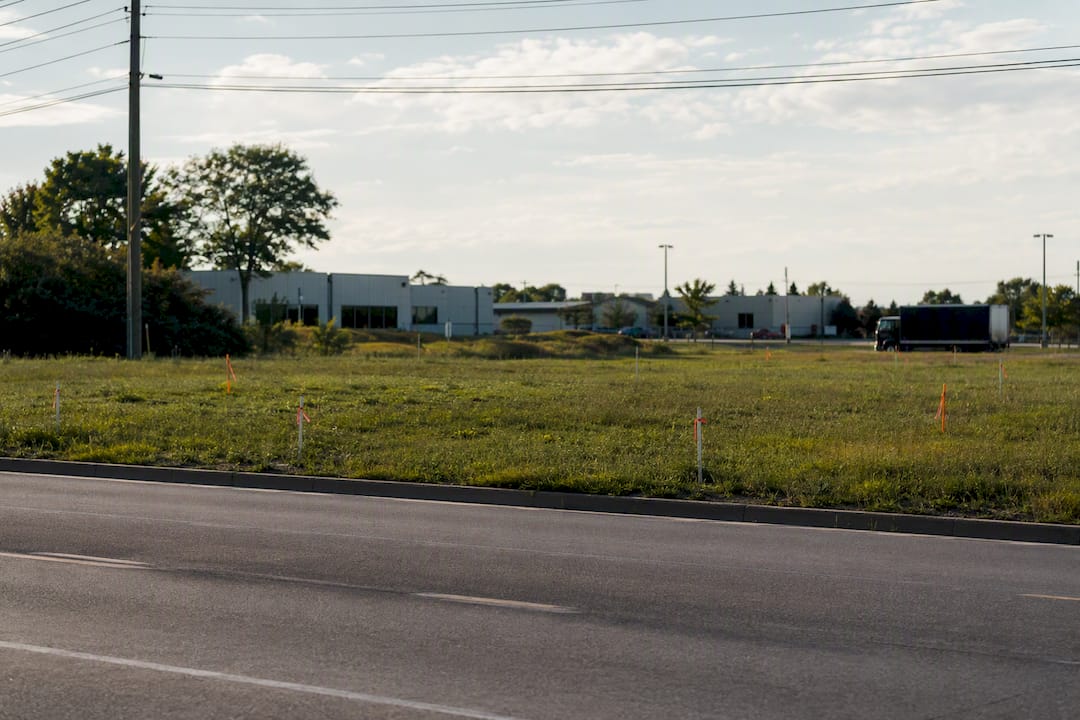
Another common success pattern: a landowner planning a subdivision learns during the meeting that a drainage easement runs through the middle of their preferred lot configuration. Staff flags it, the applicant adjusts the concept plan before formal submittal, and the project avoids a rejected plat months later. The redesign happens on paper, at low cost, instead of after engineering drawings are already stamped.
Multi-department attendance often produces the clearest wins. When transportation, drainage, and zoning reviewers are in the same room, conflicts between their requirements surface immediately. A project that would otherwise get contradictory comments in separate review rounds instead gets a single, reconciled set of expectations before the applicant spends money on detailed design.
The common thread across genuinely successful pre-apps: the applicant left with a specific list from planning permit applications, not a vague sense of encouragement. A checklist naming required studies, a referral to a technical committee, or a clear read on public hearing likelihood. Those outcomes give the applicant something to act on immediately, rather than a pleasant meeting that changes nothing about how the project gets designed.
What Pitfalls Should You Avoid in a Pre-Application Meeting?
The most common mistake is showing up without a concept graphic. A verbal description of a project, no matter how detailed, gives staff nothing concrete to react to, and you'll leave with generic guidance instead of specific direction. If you bring nothing visual, expect nothing specific back.
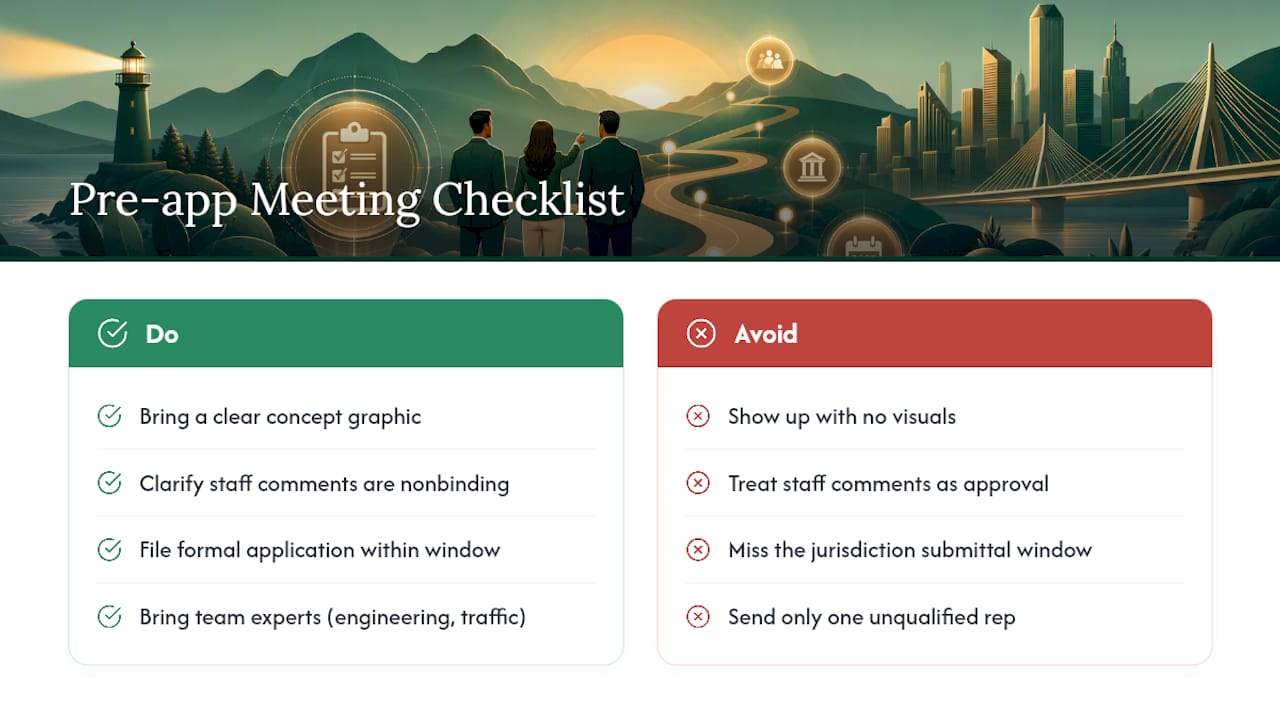
A second common pitfall: treating staff comments as final approval. Applicants sometimes proceed straight to detailed design or even construction financing based on informal comments from a pre-app, only to find the formal application process surfaces different concerns or a governing board disagrees with staff's read. Staff guidance at this stage carries no binding weight.
Missing your jurisdiction's submittal window is another quiet trap. If your formal application isn't filed within the required period after the pre-app (commonly six months), you may need to schedule an entirely new meeting and pay the fee again, losing the time advantage the pre-app was supposed to buy you.
Applicants also frequently under-invite their own team. Sending a single representative who can't answer engineering or traffic questions on the spot means those questions get tabled for a follow-up round, adding weeks to a process the meeting was meant to shorten. And a related mistake: arriving with an unprioritized list of a dozen scattered questions instead of the three or four that actually determine whether the project is feasible as designed. Staff time in these meetings is limited, and a scattershot approach means your most important question might not get answered before time runs out.
How Does a Pre-Application Meeting Affect Your Overall Timeline?
A well-run pre-application meeting shortens your overall approval timeline, even though it adds a step before formal submittal. The math works because it front-loads discoveries that would otherwise surface as review comments weeks or months into a formal application, each one triggering a resubmittal cycle.
Consider the alternative: skip the pre-app, submit a formal application, and find out during first review that a traffic study was required all along. That discovery doesn't just cost the time to complete the study. It resets your position in the review queue and can push a project's timeline back by a full review cycle, sometimes two.
Scheduling itself has predictable rhythm once you know your jurisdiction's pattern. Some cities respond to meeting requests within two business days and schedule the session within a week, as Colorado Springs does. Build that into your project planning rather than assuming you can request a pre-app and meet the following morning.
The submittal deadline after the meeting matters just as much. If your jurisdiction gives you six months to file the formal application, treat that as a hard planning constraint. Projects that let the window lapse while finalizing financing or design details often have to restart the pre-app process entirely, adding weeks back onto a timeline the meeting was designed to protect.
The net effect for a well-prepared applicant: a pre-app adds perhaps two to four weeks upfront, but it routinely saves multiples of that by preventing the review restarts that come from surprises discovered too late.
Realistic Expectations Matter More Than Perfect Answers
Staff comments in a pre-application meeting are a preview, not a verdict, and treating them otherwise sets developers up for disappointment. The projects that move fastest afterward aren't the ones with the smoothest meetings. They're the ones where the applicant walked in with enough detail that staff could name real problems early, when fixing them still costs a redrawn sketch instead of a redesigned foundation.
— Jeremy Wenger
Get Expert Help Preparing for Your Pre-Application Meeting
Urban Planning Pros builds the exact materials that turn a vague pre-app into a productive one. Where a generic consultant hands you a checklist, our team develops the feasibility analysis, concept plan, and zoning read that staff need to give you specific, usable comments instead of general caveats.

A typical engagement includes a feasibility study that identifies zoning and site constraints before you ever request a meeting, a refined concept plan sized to your actual site conditions, and a prioritized question list built around your project's real risk points. Once the meeting happens, we help translate staff feedback into a concrete follow-up action list rather than a stack of loose notes. If your project involves multiple agencies, ambiguous ordinance language, or a build cost that makes redesign expensive, that preparation pays for itself well before your first shovel goes in the ground. Reach out through Urban Planning Pros to schedule a feasibility consultation and get your pre-application packet built right the first time.
Where to Check Local Pre-Application Rules and Portals
Rules, fees, and portals vary by jurisdiction, so confirm details directly with your city or county before scheduling. Useful starting points include Pittsburgh's pre-application meeting page, Colorado Springs's request portal, and Omaha's ONEBiz scheduling system, which show how forms, checklists, and deadlines are typically structured.
Sources
- Pre-Application Meeting - Pittsburgh, PA
- Pre-Application Meeting Request | City of Colorado Springs
- Pre-Application Meeting | Maricopa County, AZ